Where Time Slows Down and Nature Speaks: An Alaskan Journey
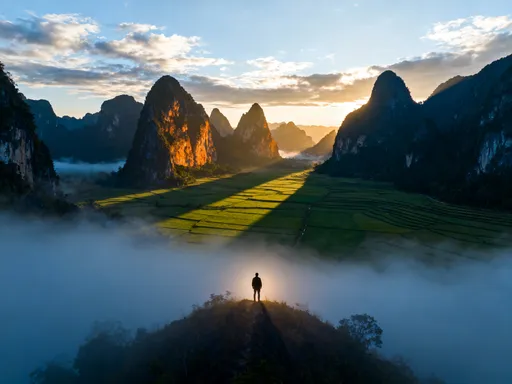
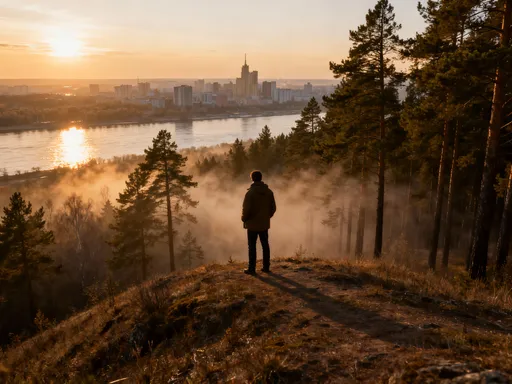
Have you ever felt the world rushing past while you’re just trying to breathe? In Alaska, everything changes. I traded hustle for stillness, swapping city noise for the whisper of wind through spruce trees and the distant crack of glaciers. This isn’t just travel—it’s presence. Through slow travel, I discovered raw, untouched nature in ways I never expected. The air smelled of moss and cold water. The sky stretched endlessly, shifting from silver dawn to golden dusk in long, soft strokes. There were no crowds, no sirens, no notifications—only the rhythm of the land. Let me take you there, where time slows down and nature speaks.
The Call of the Last Frontier
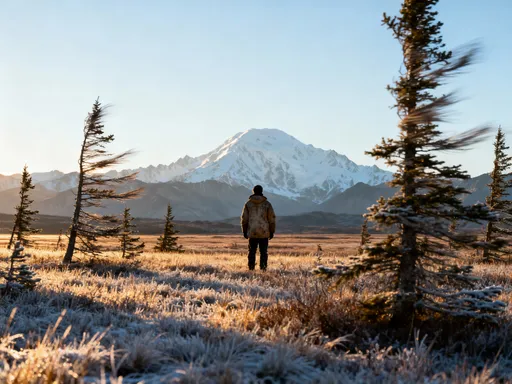
Alaska is not a destination you conquer; it is a place you enter with humility. As the largest state in the United States, it spans over 660,000 square miles of mountains, tundra, forests, and coastline. Yet it holds fewer than 800,000 residents, making it the least densely populated state in the nation. This vastness is not just measured in geography—it is felt in the silence, in the space between sounds, in the way light lingers on snowfields long after sunset. When I stepped off a small bush plane onto a gravel airstrip near Denali, the first thing I noticed was not the view, but the quiet. No engines, no voices, no hum of electricity—just the soft sigh of wind through spruce trees and the distant trickle of meltwater. That silence was not empty; it was full of presence.
Modern life conditions us to move quickly, to pack more into each day, to measure success by how much we accomplish. But Alaska resists that logic. Here, nature sets the pace. A grizzly bear does not hurry to catch a salmon. A glacier does not rush to calve into the sea. The land operates on a different timeline—one that invites patience, attention, and openness. To travel slowly in Alaska is not a luxury; it is a necessity. It means releasing the need to check off landmarks and instead allowing yourself to be shaped by the journey. It means waking without an alarm, walking without a map, and sitting still long enough to notice how the light changes on a mountainside.
Slow travel in Alaska is not about doing less—it is about experiencing more. It begins with a shift in mindset: from tourist to witness. When you let go of rigid schedules and predetermined outcomes, you open yourself to moments that cannot be planned—like spotting a fox dart across a frost-covered meadow at sunrise or hearing the deep, resonant call of a loon echo across a still lake. These are not just scenic highlights; they are invitations to reconnect with a deeper sense of awareness. In a world that often feels fragmented and fast, Alaska offers a rare opportunity to feel whole again.
Why Slow Travel Fits Alaska Like Snow on Peaks
The philosophy of slow travel is simple: go deeper, not farther. It emphasizes connection over consumption, presence over productivity, and quality over quantity. In Alaska, this approach is not just ideal—it is essential. The state’s immense scale and unpredictable weather make it nearly impossible to rush through. Roads end abruptly. Flights are delayed by fog. Trails disappear under snow. These are not inconveniences; they are reminders that nature is not a backdrop for human activity, but a living, breathing force with its own rhythms.
“Checklist tourism”—the practice of visiting as many sites as possible in the shortest time—falls apart here. Imagine arriving at a viewpoint just as the sun breaks through the clouds, illuminating a glacier in golden light—only to realize your guide is already calling the group back to the bus. That moment, fleeting and profound, is lost to the pace of the itinerary. In contrast, slow travel allows you to linger. It gives you the space to watch a grizzly bear stand on its hind legs to sniff the air, then slowly return to fishing, undisturbed by human presence. It lets you sit on a rock for an hour, listening to the drip of melting ice, feeling the cold wind on your face, and simply being.
Patience reveals what speed obscures. One afternoon, I sat on the bank of the Nenana River, camera lowered, eyes fixed on a bend in the water. For nearly an hour, nothing happened. Then, a ripple. A salmon leapt. A shape emerged—dark, powerful, deliberate. A grizzly stepped into the shallows, moved with quiet precision, and caught its meal in a single motion. No flash, no crowd, no commentary—just the raw truth of survival in the wild. That moment stayed with me not because it was dramatic, but because I was truly there to witness it.
Beyond personal enrichment, slow travel has tangible benefits for the environment and local communities. Moving slowly means leaving a lighter footprint. Fewer flights, less fuel, smaller groups—all contribute to reduced impact on fragile ecosystems. It also fosters deeper respect for local cultures. When you spend days in a small community rather than hours, you begin to understand the resilience, history, and values of the people who call this land home. You learn that life here is not about convenience, but about adaptation, cooperation, and respect for nature’s limits.
Chasing Stillness: My Week in Denali National Park
Denali National Park, home to North America’s tallest peak, is a place where scale defies comprehension. The mountain itself—known as Denali, meaning “the tall one” in Koyukon Athabascan—rises more than 20,000 feet from base to summit, a solitary giant rising from the tundra. But the true magic of the park lies not just in its peaks, but in its stillness. I spent a week there without a fixed schedule, traveling by shuttle bus along the single 92-mile road that winds into the wilderness.
Each morning began in quiet. Frost coated the tent, and my breath fogged the air as I stepped outside. The scent of damp earth and pine filled the forest. Birds called—sharp, clear notes cutting through the cold. One day, I followed a narrow trail off the main path, not knowing where it led. After half an hour, I reached a small clearing overlooking a valley. A moose stood in the distance, its dark shape motionless against the pale light. I sat on a rock and opened a sketchbook. I didn’t draw well, but the act of observing—of noticing the curve of its antlers, the way its breath rose in clouds—anchored me in the moment. Time didn’t matter. There was no need to move on.
Another afternoon, I paused at a bend in the Toklat River. The water ran swift and silty, glacial milk swirling in eddies. I watched a group of Dall sheep on a distant ridge, their white coats glowing in the sun. A park ranger passed by and said, “Most people drive all the way to Mile 53 and complain they didn’t see anything. But if you stop, really stop, you start to see everything.” He was right. The more I slowed down, the more the landscape revealed itself—not in grand spectacles, but in subtle details: a spiderweb jeweled with dew, the track of a wolverine in soft mud, the sudden silence when a golden eagle passed overhead.
By the end of the week, I noticed a shift in my own rhythm. My thoughts were quieter. My steps were slower. I no longer felt the urge to document every moment with a photo. Instead, I carried the experience in my body—the ache in my legs from hiking, the chill of the wind, the warmth of tea sipped from a thermos at sunrise. I had not “seen it all.” I had not climbed the mountain. But I had been present. And that, in Denali, was enough.
On the Water: A Kayaking Journey Through Kenai Fjords
The Kenai Peninsula, jutting into the Gulf of Alaska, is a land of contrasts—snow-capped peaks, dense forests, and a rugged coastline carved by glaciers. I joined a small group for a five-day sea kayaking trip along the fjords, launching from the small town of Seward. Each morning began before dawn—cold, dark, and quiet. We packed our gear into waterproof bags, loaded the kayaks, and pushed off into the still water. The sound of paddles dipping into the sea became a kind of meditation.
Kayaking forces slowness. You cannot rush across 20 miles of open water in a small boat. The tides, the wind, the cold—all demand respect. But this limitation is also a gift. Moving at the pace of the water, you become part of the environment. You notice the way harbor seals watch you from a distance, their heads bobbing like buoys. You hear the crack and groan of distant glaciers calving. You feel the mist on your face as a waterfall plunges from a cliff into the sea.
One evening, as we camped on a rocky shore, I sat by the fire, wrapped in a wool blanket. The sky cleared, revealing a sweep of stars undimmed by light pollution. Then, a sound—a deep, resonant exhalation. I turned toward the water. About 200 yards away, a humpback whale breached, its massive body arching out of the sea before crashing back with a thunderous splash. My heart stopped. No photo could capture that moment. No video could convey the awe. It was not a performance; it was a wild creature living its life, indifferent to human presence. And yet, I felt profoundly honored to witness it.
Another day, we paddled near a colony of sea otters, floating on their backs, cracking open shellfish with stones. A puffin darted past, its colorful beak bright against the gray sky. We stopped for lunch on a pebble beach, eating smoked salmon and dried fruit in silence, listening to the lap of waves. There was no Wi-Fi, no email, no distractions. Just the rhythm of the tides and the company of good people. By the end of the trip, I realized how much mental clutter I usually carry—worries, to-do lists, unanswered messages. Out here, none of that mattered. What mattered was warmth, food, safety, and the beauty around us.
Life in the Wild: Encounters with Alaska’s Residents
Alaska’s wildlife is not a zoo exhibit. These animals are not here for our entertainment. They are survivors in one of the harshest environments on Earth. Slow travel allows us to observe them not as photo opportunities, but as fellow inhabitants of this planet. I learned to keep my distance, to use binoculars instead of zoom lenses, to move quietly and respectfully.
One morning in the Arctic National Wildlife Refuge, I watched a caribou herd cross a wide river. The animals moved in single file, their hooves splashing through the current. Calves stayed close to their mothers. The journey was not easy—some struggled against the flow—but they persisted. This was not a spectacle; it was a migration, a cycle that has repeated for thousands of years. I sat in the tundra for over an hour, watching, feeling small in the face of such ancient rhythms.
Later, near Haines, I spotted a bald eagle perched on a dead tree, tearing into a salmon. Another soared overhead, its wingspan wide against the sky. In Denali, I saw a black bear ambling through a meadow, stopping to dig for roots, then lying down to nap in the sun. These were not staged moments. They were real, unscripted, and fleeting. But because I was moving slowly, I had time to absorb them—not just with my eyes, but with my whole being.
Local guidelines emphasize staying at least 300 yards from bears and 100 yards from other wildlife. These rules are not arbitrary; they protect both animals and people. When you move slowly, you are less likely to startle wildlife. You also increase your chances of meaningful sightings—because animals are more likely to behave naturally when they don’t feel threatened. I learned that patience is not passive; it is an active form of respect.
Connecting with Local Rhythms: Time in Small Communities
Alaska’s soul is not only in its wilderness, but in its people. In small towns like Talkeetna, Homer, and Haines, life moves at a different pace. There are no traffic lights in Talkeetna. The grocery store closes at 7 p.m. The post office doubles as a café. I spent three days in Haines, a quiet town nestled between mountains and sea, accessible only by boat or plane.
I ate breakfast at a family-run diner where the owner knew everyone by name. I bought hand-knitted mittens from a local artisan at the weekly market. I attended a community potluck where people shared stories, soup, and sourdough bread. No one asked what I did for a living. No one tried to sell me anything. Conversations were easy, unhurried, rooted in place.
Life here is not romanticized. Winters are long and dark. Supplies arrive by barge. Heating oil is expensive. But there is a quiet resilience, a deep connection to the land and to each other. One evening, I spoke with a fisherman who had lived in Haines for 40 years. He spoke of changes—warmer winters, thinner ice, fewer salmon—but also of continuity. “We adapt,” he said. “We always have.”
Slow travel allows for these kinds of connections. When you stay in a guesthouse instead of a chain hotel, when you eat at a local diner instead of a tourist restaurant, when you attend a community event instead of a staged show, you begin to see the real Alaska. Not as a postcard, but as a living, breathing place shaped by history, hardship, and hope.
Carrying Alaska Home: Lessons in Slowness
Returning home was harder than I expected. The noise, the pace, the constant demands—it all felt jarring. But Alaska stayed with me, not as a memory, but as a shift in perspective. I began to notice small things: the way light falls through my kitchen window in the morning, the sound of rain on the roof, the feel of soil when I garden. I started taking walks without headphones, just listening. I bought less, consumed less, and felt more.
The lessons of slow travel are not confined to remote wilderness. They can be practiced anywhere. You don’t need to kayak a fjord to be present. You can sit in your backyard and watch the birds. You can eat a meal without your phone. You can walk without a destination. Slowness is not about location; it is about intention.
I still hear the wind in the spruce trees. I still see the glow of Denali at dawn. But more than that, I carry the understanding that presence is a choice. In a world that glorifies busyness, choosing stillness is an act of courage. Alaska taught me that the deepest experiences are not found in speed, but in silence; not in accumulation, but in attention.
Wherever you are, whatever your life looks like, I invite you to slow down. Step off the treadmill of constant doing. Listen. Breathe. Let the world speak. You might be surprised by what you hear. And if you ever find yourself in Alaska, leave the checklist behind. Let the land guide you. Let time expand. Let stillness fill you. Because in the end, the greatest journey is not across miles, but into the quiet spaces within.