You Won't Believe These Hidden Viewpoints in Nouakchott
Nestled where the Sahara meets the Atlantic, Nouakchott offers quiet beauty most travelers never see. I was surprised by its raw charm—empty dunes, local markets alive with color, and oceanfront views few ever photograph. This isn’t a flashy capital, but one full of subtle moments. If you're curious about real, off-the-beaten-path Africa, let me show you the viewpoints that made me fall for Mauritania’s quiet heart. Far from the crowded tourist circuits, this coastal desert city reveals itself slowly, rewarding those who pause long enough to notice the rhythm of daily life, the warmth of its people, and the unexpected harmony between sand, sea, and soul.
Arriving in a Desert Capital
Touching down at Nouakchott–Oumtounsy International Airport, one is immediately struck by the vastness of the landscape. The city unfolds like a quiet whisper against the immense backdrop of the Sahara. Unlike the towering skylines of West Africa’s bustling capitals, Nouakchott rises modestly from the sand, a low-rise urban sprawl where concrete blends with dunes and the horizon seems to stretch endlessly. The first impression is not of grandeur, but of resilience—a city carved from heat, wind, and determination.
Located on the west coast of Mauritania, Nouakchott sits directly on the Atlantic shore, with the desert pressing in from the east. The city's geography is defined by this duality: the cool, salty breeze from the ocean on one side and the dry, sweeping sands of the Sahara on the other. This unique positioning creates a climate that is both harsh and hypnotic. Daytime temperatures often climb above 35°C (95°F), especially between April and October, but the coastal influence keeps humidity low, making the heat more bearable than in inland regions.
For first-time visitors, the pace of life can be both disarming and refreshing. There are no metro lines or rapid transit systems—most travel happens by foot, bicycle, or shared taxis known locally as louages. These minibuses follow informal routes through the city, offering an authentic glimpse into local commuting habits. While infrastructure may seem sparse compared to other African capitals, the simplicity adds to the city’s charm. Visitors should come prepared with patience, sunscreen, and a willingness to adapt. ATMs can be unreliable, and credit card use is limited, so carrying local currency—ouguiya—is advisable. Yet, these small challenges are part of what makes Nouakchott feel unfiltered and real.
The City’s Pulse: Where Culture Meets the Coast
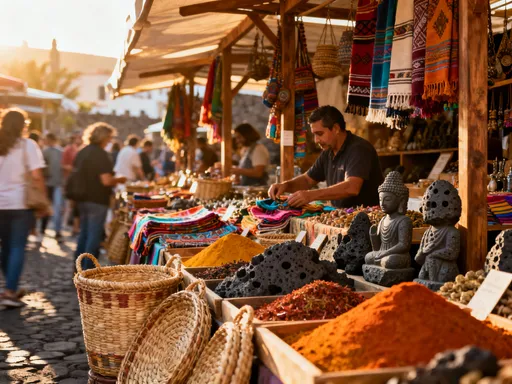
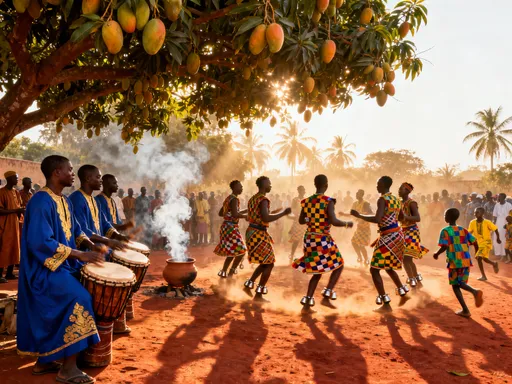
To understand Nouakchott, one must walk its streets, listen to its rhythms, and engage with its people. The heart of daily life beats strongest in the Central Market, a sprawling maze of stalls where the air hums with barter, laughter, and the scent of spices. Here, vendors sell everything from fresh dates and millet flour to hand-dyed textiles and intricately carved wooden bowls. The colors are vivid—indigo fabrics, saffron-yellow turmeric, and deep red henna create a visual feast that reflects the richness of Mauritanian culture.
Just beyond the market, Avenue Gamal Abdel Nasser serves as a main artery of the city, lined with modest shops, tea houses, and street vendors offering grilled fish and sweet mint tea. This is not a polished boulevard, but a working street where life unfolds openly. Children walk home from school in crisp uniforms, elders gather under shaded awnings to discuss the day’s news, and women in flowing moubas—traditional dresses—move gracefully between errands. There’s a sense of order in the apparent chaos, a rhythm that locals follow without effort.
One of the most beautiful aspects of Nouakchott’s daily life is the centrality of tea. Known as ataya, this strong, sweet green tea is more than a drink—it’s a ritual. It’s poured from a height to create a frothy top, shared among friends and family, and served in three rounds, each with its own symbolic meaning: warmth, hospitality, and farewell. To be invited for tea is to be welcomed into someone’s world, even if only for a short while. This simple act embodies the quiet generosity that defines the city’s spirit.
Sunset at the Atlantic Edge
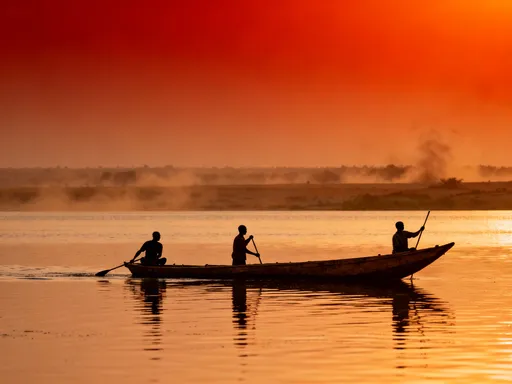
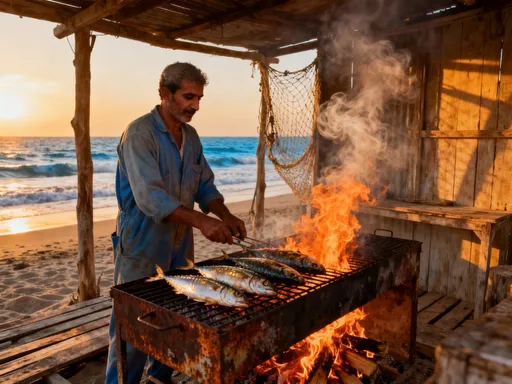
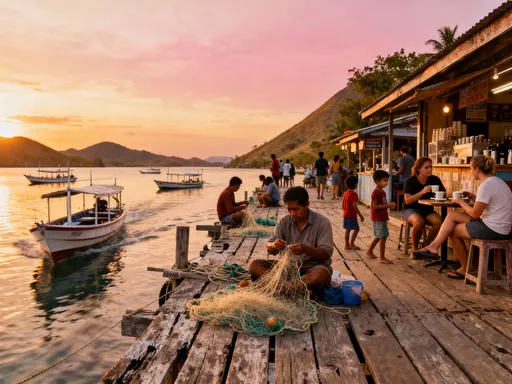
As the sun begins its descent, the true magic of Nouakchott reveals itself along its oceanfront. The coastline here is not lined with resorts or boardwalks, but with open stretches of sand where fishermen mend their nets and families gather to cool off after the day’s heat. One of the most serene spots to witness the sunset is near the fishing port, where wooden pirogues rest on the shore like sleeping birds. As the sky shifts from gold to deep orange and finally to dusky purple, the contrast between the desert and the sea becomes almost poetic—endless dunes on one side, the rhythmic crash of Atlantic waves on the other.
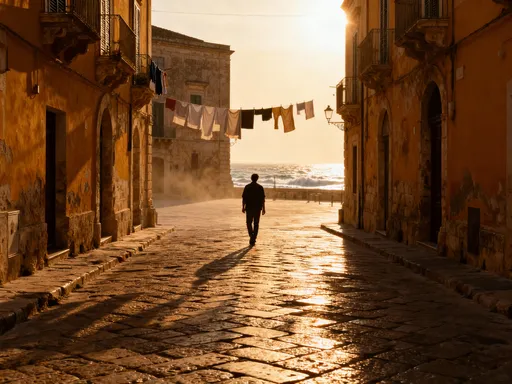
The light during these evening hours is extraordinary. It bathes the city in a soft, amber glow, softening the edges of buildings and casting long shadows across the sand. Photographers will find this the ideal time to capture the soul of Nouakchott—not in grand monuments, but in quiet moments: a child chasing a kite, a woman balancing a water pot on her head, a fisherman silhouetted against the fading sun. There are no crowds, no ticketed viewpoints—just open access to one of West Africa’s most understated yet powerful natural spectacles.
What makes this shoreline so peaceful is its authenticity. Unlike more developed coastal cities, Nouakchott’s waterfront remains largely untouched by commercialization. There are no loud beach clubs or neon signs—just the sound of the wind and waves, the occasional call to prayer drifting from a nearby mosque, and the quiet presence of those who live beside the sea. For travelers seeking stillness, this is a rare gift: a place where nature and community coexist without performance.
Elevated Perspectives: Rooftops and Urban Vantage Points
In a city where few buildings rise above three stories, gaining elevation offers a new way of seeing. Some of the best urban viewpoints are found atop hotels and private homes, where rooftop terraces open to panoramic views of the city and desert beyond. The Hotel Laâyoune and Tivoli Hotel, though modest by international standards, offer rooftop cafés where visitors can sip tea or coffee while watching the city transition from day to night.
From these heights, Nouakchott appears as a constellation of low structures scattered across the sand. As darkness falls, pockets of light begin to flicker—street lamps, home interiors, the headlights of passing vehicles. The contrast between the illuminated city and the vast, dark desert is striking. On clear nights, the sky fills with stars, unobscured by light pollution. It’s not uncommon to see families and friends gathered on rooftops, escaping the warmth of the day, sharing stories, and enjoying the cool evening air. These moments of quiet connection are as much a part of the city’s landscape as its streets and buildings.
For photographers and contemplative travelers, these elevated spaces offer more than just a view—they provide perspective. From above, the city’s simplicity becomes a kind of elegance. The irregular layout, the absence of rigid grids, the organic way neighborhoods grow—it all speaks to a way of life shaped by environment and tradition rather than modern urban planning. To stand on a rooftop at dusk is to witness Nouakchott not as a place of lack, but of presence.
Beyond the City: Day Trips to Desert Viewpoints
Just a short drive east of Nouakchott, the city’s edges dissolve into the Saharan landscape. This transition zone, where urban life gives way to open desert, holds some of the most breathtaking viewpoints in the region. The road to Nouadhibou, though long, offers numerous opportunities to stop and absorb the changing terrain. Even within 30 to 50 kilometers of the capital, the environment shifts dramatically—paved roads give way to packed sand, scattered trees yield to endless dunes, and the silence grows deeper.
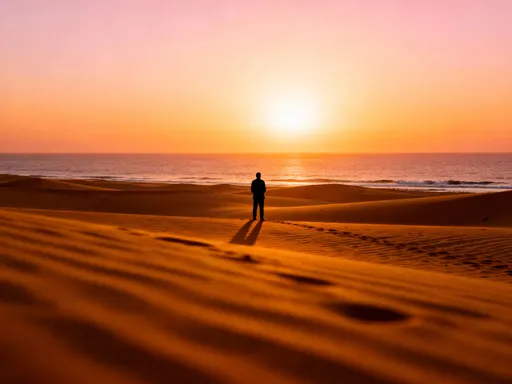
One particularly memorable stop lies near the village of Chami, where the dunes rise in soft, undulating waves. Here, visitors can climb a gentle slope and sit in complete stillness, watching the wind shape the sand and listening to the quiet hum of the desert. There are no facilities, no signs, no guided tours—just raw, unfiltered nature. On clear days, the horizon seems infinite, a seamless blend of earth and sky that evokes a sense of both insignificance and connection.
These desert outskirts are also where traditional nomadic life continues. While fewer families now follow fully migratory routes, many still maintain seasonal camps, tending to goats, camels, and sheep. Encounters with nomadic herders are often brief but meaningful—exchanged smiles, a shared cup of tea, or a moment of silent acknowledgment. Their way of life, rooted in resilience and deep knowledge of the land, offers a powerful counterpoint to modern urban existence. To witness this is to understand another dimension of Mauritania’s identity—one that values mobility, self-reliance, and harmony with nature.
Local Eyes: Viewing the City Through Its People
Perhaps the most revealing viewpoints in Nouakchott are not geographic, but human. Conversations with residents reveal a deep affection for their city—one that outsiders might not immediately perceive. Many Mauritanians speak of Nouakchott not as a place of luxury or convenience, but as a home shaped by endurance and community. They point with pride to the strength of family ties, the preservation of cultural traditions, and the quiet dignity with which people face daily challenges.
One shopkeeper in the Central Market explained, “We don’t have much, but we have each other.” This sentiment echoes across generations. Older residents recall the city’s early days as a small fishing village before it became the capital in 1960, while younger people speak of hopes for education, opportunity, and gradual progress. Yet, across age groups, there is a consistent thread: a belief that beauty exists in simplicity, and that worth is not measured by wealth, but by character.
What becomes clear through these interactions is that locals see Nouakchott through a lens of belonging. They notice the way sunlight hits a particular wall in the morning, the best spot to buy fresh bread, or the quiet corner where elders gather to recite poetry. Their appreciation is not based on spectacle, but on familiarity and care. For the traveler, learning to see the city through their eyes is perhaps the most transformative experience of all—a reminder that true understanding comes not from observation alone, but from connection.
Traveler’s Guide: Practical Tips for a Meaningful Visit
For those considering a visit, timing is key. The best months to travel to Nouakchott are between November and February, when temperatures are milder, ranging from 25°C to 30°C (77°F to 86°F), and the Harmattan winds have not yet brought dust from the interior. Early morning and late afternoon offer the most favorable light for photography, with soft shadows and rich color contrast. Midday sun can be harsh, so planning indoor activities—such as market visits or cultural exchanges—during peak heat is advisable.
When photographing people, always ask for permission. While many locals are welcoming, respecting personal boundaries is essential. Capturing candid moments is possible, but doing so discreetly and with sensitivity ensures that your presence remains respectful. Focus on details—the texture of woven fabric, the pattern of light on a wall, the reflection of the sky in a puddle—and you’ll find that Nouakchott reveals its beauty in subtle ways.
Cultural awareness is equally important. Mauritania is a conservative Muslim country, and modest dress is expected, especially for women. Loose-fitting clothing that covers shoulders and knees is recommended. Public displays of affection are not appropriate, and alcohol is prohibited. Learning a few phrases in Arabic or Hassaniya, such as salaam alaikum (peace be upon you) or shukran (thank you), goes a long way in building rapport. Above all, approach the city with humility and openness. The rewards are not in ticking off attractions, but in the quiet moments of human connection and natural beauty that unfold when you slow down.
Conclusion: Why Nouakchott’s Viewpoints Stay With You
Nouakchott does not reveal itself all at once. Its beauty is not in monuments or postcard vistas, but in the quiet accumulation of moments—the sound of tea being poured, the warmth of a shared smile, the way the desert light shifts at dusk. It is a city that asks for patience, that rewards stillness, and that changes the way you see not just Mauritania, but travel itself. In a world that often equates value with visibility, Nouakchott stands as a reminder that some of the most meaningful experiences are the ones that go unnoticed by the hurried eye.
What stays with you after visiting is not a checklist of sights, but a feeling—an awareness of simplicity, resilience, and quiet dignity. The viewpoints here are not just places to stand and look, but invitations to reflect, to listen, and to see differently. They challenge the assumption that beauty must be dramatic or easily accessible. Instead, they teach that depth often lies beneath the surface, in the ordinary, the humble, and the human.
To visit Nouakchott is not merely to travel to a new place, but to shift your perspective. It is to learn that a capital city can be both fragile and strong, both quiet and full of life. It is to discover that the Sahara’s edge holds not emptiness, but presence. And it is to realize that the most unforgettable journeys are not always the ones that take you farthest, but the ones that bring you closest—to a place, to its people, and to yourself. So if you’re ready to see beyond the expected, to explore with openness and quiet curiosity, then let Nouakchott welcome you—not as a tourist, but as a witness to something rare and real.