You Gotta Experience Toronto’s Culture—This Is Next-Level
Toronto isn’t just Canada’s largest city—it’s a living mosaic of cultures, flavors, and street-level energy. I went not to sightsee, but to feel the rhythm of real life here. From steaming dumplings in Chinatown to drum circles in Kensington Market, every moment was layered with meaning. This is a place where tradition and innovation collide in the best way. If you want culture that pulses through sidewalks and sparks conversation, Toronto delivers—authentically, loudly, beautifully.
Arrival: First Impressions That Surprise
From the moment you step off the plane at Toronto Pearson International Airport, the city announces its identity—not through grand monuments or sweeping vistas, but through sound, language, and movement. Announcements echo in English, Mandarin, Punjabi, Spanish, and Arabic, a reminder that this is one of the most linguistically diverse cities in the world. More than half of Toronto’s residents were born outside of Canada, and that global heritage isn’t tucked away in enclaves—it’s woven into the fabric of everyday life. The transit system, efficient and far-reaching, becomes your first cultural guide. As you board the UP Express or a TTC bus, you’re surrounded by voices from Lagos, Mumbai, Beirut, and Bogotá, each carrying stories of migration, resilience, and reinvention.
What sets Toronto apart is not just its diversity, but how naturally it’s lived. There’s no performative exoticism, no cultural displays staged solely for tourists. Instead, you witness real life unfolding—mothers bargaining in Polish at a grocery store, seniors playing chess in a park while speaking Somali, students debating in French outside a university. This authenticity makes all the difference. For travelers seeking meaningful connection, Toronto offers something rare: the chance to be a quiet observer of a society where difference isn’t just tolerated—it’s celebrated as the norm. That sense of belonging, even as a visitor, begins the moment you arrive.
The city’s openness is also reflected in its infrastructure. Signage is clear and multilingual in key areas, public spaces are wheelchair accessible, and transit staff are trained in cultural sensitivity. These details may seem small, but they signal a city that values inclusion not as a slogan, but as a practice. For a traveler, especially one traveling alone or with family, this creates an immediate sense of safety and welcome. You’re not just passing through—you’re invited in. And that invitation, quiet but sincere, shapes the entire journey.
Neighborhood Deep Dives: Where Culture Lives on the Streets
If Toronto’s soul has a heartbeat, it pulses strongest in its neighborhoods. These are not curated tourist zones with souvenir shops and overpriced cafes, but living, breathing communities where culture isn’t performed—it’s practiced daily. Walking through Chinatown on Spadina Avenue, you’re greeted by the scent of roasting duck and fresh bao buns, neon signs in traditional Chinese characters, and storefronts stacked with lychees, bitter melon, and jars of fermented tofu. But this isn’t a theme park version of Chinese culture. It’s a real neighborhood, where elders gather for tai chi in the morning and students grab bubble tea between classes.
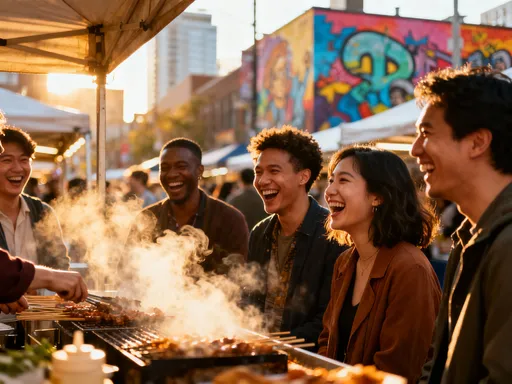
Just a few blocks north, Kensington Market tells a different but equally rich story. Once home to Jewish immigrants, then Caribbean and Latin American communities, this colorful district is a patchwork of cultures layered over time. Murals depict revolutionary figures, vintage clothing shops sit beside Caribbean bakeries, and the sound of reggae, salsa, and punk rock drifts from open windows. On a Sunday morning, the market comes alive with farmers selling heirloom tomatoes, handmade empanadas, and fresh-cut flowers. Locals chat in Spanglish, children chase each other past fruit stands, and street artists sketch portraits for spare change. It’s chaotic, vibrant, and utterly real.
Little Italy, centered along College Street, offers another flavor of community life. Family-run cafes serve strong espresso and cannoli made from recipes passed down for generations. In the evenings, the sidewalks fill with families sharing meals al fresco, laughter spilling from trattorias. Unlike the polished trattorias of Rome or Florence, these restaurants aren’t trying to impress—they’re feeding their neighbors. And that’s the point. In Toronto, culture isn’t preserved behind glass; it’s served on a plate, painted on a wall, spoken in a thousand accents.
Greektown, along Danforth Avenue, completes the picture. String lights stretch across the street, tavernas blast traditional music, and the smell of grilled souvlaki fills the air. But beyond the festivals and weekend crowds, this is a neighborhood where Greek-Canadians raise their children, attend church, and keep language schools alive. Walking these streets, you realize that Toronto’s cultural richness isn’t accidental—it’s the result of generations of immigrants who planted roots and built lives, not just businesses. To explore these neighborhoods is to understand that culture isn’t something you consume; it’s something you witness, respect, and, if you’re lucky, briefly share.
Markets as Cultural Hubs: More Than Just Shopping
In many cities, markets are tourist attractions. In Toronto, they are social institutions. Nowhere is this more evident than at St. Lawrence Market, a historic building that has served the city since the 1800s. On a Saturday morning, the market is alive with energy—locals weaving through stalls, greeting vendors by name, sampling cheeses, olives, and freshly baked bread. The atmosphere is warm, informal, and deeply communal. This isn’t a place to grab a quick souvenir; it’s where families gather for weekend breakfasts, where chefs source ingredients, and where strangers strike up conversations over shared curiosity.
The peameal bacon sandwich, often called Toronto’s signature dish, is more than a meal here—it’s a ritual. Served on a soft kaiser roll with a fried egg or mustard, it originated with Irish immigrants who used cornmeal to preserve pork. Today, ordering one at the market isn’t just about taste; it’s about participating in a small piece of the city’s history. Vendors proudly explain its origins, often sharing stories of their own families’ connections to the trade. These interactions turn a simple sandwich into a story, a moment of connection between past and present.
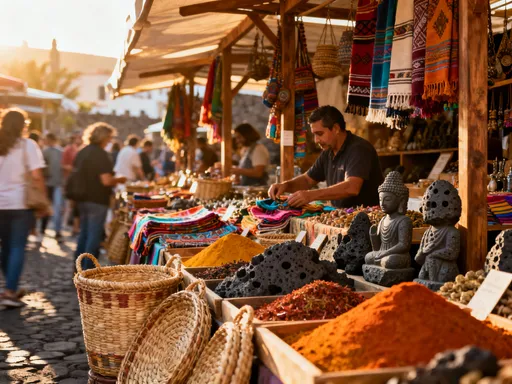
But St. Lawrence isn’t the only market where culture thrives. The Dufferin Grove Farmers’ Market, smaller and more neighborhood-focused, highlights sustainable agriculture and local craftsmanship. Here, you’ll find organic honey, handmade soaps, and fresh-cut flowers, all sold by the people who grew or made them. The emphasis is on relationships—between farmer and customer, between neighbors, between tradition and innovation. Live music, community barbecues, and storytelling events make these markets not just places to shop, but places to belong.
What makes Toronto’s markets so special is their role as equalizers. In a city with significant income inequality, these spaces remain accessible and inclusive. You’ll see people from all walks of life—students, seniors, professionals, and families—shopping side by side. The prices are fair, the atmosphere is welcoming, and the focus is on quality and connection, not spectacle. For travelers, this offers a rare glimpse into how a city feeds itself, celebrates its growers, and builds community one interaction at a time.
Arts & Performance: When the City Takes the Stage
Toronto’s artistic spirit doesn’t live only in galleries or concert halls—it spills into the streets, parks, and public squares. At Harbourfront Centre, a waterfront cultural complex, you’ll find free performances year-round: from Indigenous drum circles to contemporary dance troupes, from jazz ensembles to spoken word poets. These events aren’t polished for tourists; they’re raw, authentic, and deeply felt. Audiences sit on benches, picnic blankets, or stand in the open air, drawn not by fame, but by the energy of live creation.
The Distillery District, a pedestrian-only village of Victorian-era buildings, hosts indie theater performances, art installations, and seasonal markets. Unlike commercial theaters in the downtown core, these shows often tackle local themes—immigration, urban life, social justice—through experimental formats. The intimacy of the space, combined with the historical ambiance, makes every performance feel personal. You’re not just watching art; you’re inside it.
In neighborhoods like Parkdale and Leslieville, underground music scenes thrive in small bars and community centers. A Tuesday night might feature a Syrian oud player sharing traditional melodies, followed by a Toronto-born rapper reflecting on identity and belonging. These spaces are unpretentious, often volunteer-run, and built on mutual respect. There’s no velvet rope, no cover charge—just music, conversation, and connection.
Street performers, too, are a vital part of the city’s cultural life. Along Yonge Street or in Nathan Phillips Square, you’ll encounter violinists, breakdancers, magicians, and living statues, each bringing their own flavor to the city’s rhythm. What’s remarkable is how integrated they are—city policies support busking, and locals treat performers with genuine appreciation. A crowd gathering around a drummer isn’t just watching a show; they’re joining a moment of collective joy. In Toronto, art isn’t something you visit—it’s something you live alongside, every day.
Festivals All Year: Toronto Never Stops Celebrating
If you time your visit right, you’ll find Toronto in perpetual celebration. The city hosts over 100 cultural festivals each year, most of them free and deeply rooted in community identity. Caribana, now known as the Toronto Caribbean Carnival, is one of the largest street festivals in North America. Each summer, millions gather to watch elaborate costumes, pulsing soca music, and dance troupes that move with infectious energy. But this isn’t just a party—it’s a celebration of Caribbean heritage, resilience, and creativity, born from the immigrant experience in the 1960s.
Taste of the Danforth, held along Greektown’s main strip, draws over a million visitors with its food, music, and family-friendly atmosphere. But beyond the souvlaki and baklava, the festival honors the Greek-Canadian community’s contributions to the city. Local churches host cultural exhibits, elders teach traditional dances, and children wear folk costumes. It’s a reminder that festivals in Toronto aren’t just about consumption—they’re acts of pride and remembrance.
Winterlicious and Summerlicious offer another kind of celebration—civic love for food. For a few weeks each year, hundreds of restaurants across the city offer prix-fixe menus at accessible prices. This isn’t just a discount program; it’s a citywide invitation to explore culinary diversity. You can try Ethiopian injera in Little Ethiopia, dim sum in Agincourt, or modern Canadian cuisine in the Financial District—all in one weekend. These events encourage residents and visitors alike to step outside their routines and discover new flavors, new neighborhoods, and new stories.
Other festivals, like the Toronto International Film Festival (TIFF), Nuit Blanche, and the Toronto Jazz Festival, bring global attention, but they remain grounded in local participation. TIFF screenings sell out within minutes, not because of Hollywood glamour, but because Torontonians love cinema and storytelling. Nuit Blanche, an all-night art event, transforms the city into a living gallery, with installations in subway stations, laundromats, and parking lots. These events don’t shut down the city—they open it up, inviting everyone to see familiar spaces in new ways.
Practical Magic: Getting Around and Connecting
Navigating Toronto is part of the cultural experience. The streetcar system, with its vintage red-and-white CLRVs still running on some routes, connects neighborhoods in a way that encourages discovery. Unlike subways that rush you underground, streetcars move at street level, letting you see shop windows, street art, and daily life unfold. A ride from Bloor Street to Queen West isn’t just transportation—it’s a moving tour of the city’s evolving identity.
Walking, however, remains the best way to absorb Toronto’s rhythm. The downtown core is pedestrian-friendly, with wide sidewalks, public plazas, and green spaces like Trinity Bellwoods Park and the Toronto Islands. As you walk, you’ll notice how the city invites interaction—benches face each other, public art invites touch, and festivals often spill into sidewalks. Even in winter, when temperatures drop, the city stays alive with covered walkways, heated bus stops, and indoor markets.
Language is rarely a barrier. While English is dominant, many residents are multilingual, and code-switching is common. A simple “hello” or “thank you” in someone’s native language—whether Urdu, Tagalog, or Arabic—can spark a warm exchange. Tipping 15–20% in restaurants is standard, and politeness is highly valued, but formality isn’t required. Torontonians appreciate genuine curiosity over perfect etiquette.
Free public spaces play a crucial role in connection. Nathan Phillips Square, home to the iconic “Toronto” sign, hosts events year-round, from outdoor yoga to winter skating. The Toronto Public Library system, one of the most used in North America, offers free programs in dozens of languages. These spaces ensure that culture isn’t locked behind ticketed doors—they’re available to everyone. For travelers, this means you don’t need a big budget to feel included. Just show up, be respectful, and stay open to the unexpected.
Why This Kind of Travel Changes You
Traveling through Toronto doesn’t deliver a single, dramatic epiphany. Instead, it offers a series of quiet moments that accumulate into a deeper understanding. It’s the elderly woman who smiles at you while you struggle to pronounce a dish’s name. It’s the teenager who explains the history behind a mural in graffiti-covered alley. It’s the shared laugh over a spilled coffee at a busy market stall. These interactions don’t feel staged—they feel real, fleeting, and meaningful.
What changes you is not the checklist of places visited, but the shift in perspective. You begin to see culture not as something exotic or distant, but as something lived, shared, and constantly evolving. You realize that belonging doesn’t require permanence—that even a short stay can create moments of genuine connection. You start to listen more, ask questions, and appreciate the beauty in everyday rituals: the way a grandmother folds dumplings, the rhythm of a street drummer, the pride in a vendor’s voice when describing their food.
Toronto teaches you to slow down, to wander without an agenda, to let the city reveal itself in its own time. It shows you that diversity, when nurtured with respect and inclusion, doesn’t divide—it unites. And it reminds you that travel, at its best, isn’t about escaping your life, but about expanding it. By stepping into the lives of others, even briefly, you return home with a wider heart, a broader mind, and a deeper sense of what it means to be human.
Toronto doesn’t perform culture—it lives it. The real magic isn’t in seeing, but in joining: tasting, listening, moving alongside its people. This is travel that stays with you, not because of what you saw, but because of how you felt—seen, welcomed, part of something bigger. Go not to tick boxes, but to belong, even if just for a moment.